
Sloping Garden Ideas: How to Level, Terrace and Plant a Garden on a Slope
A sloping garden has height built in. On a flat plot, that’s something you’d have to build.
Split the slope into levels and each one can do a different job. The top might be for sitting out in the evening, with a lawn or vegetable beds further down.
Below are 20 sloping garden ideas, from terraces and steps to water and planting. After those come ideas for each kind of slope, and a short section on what to check before you dig.
Terraced Garden Ideas
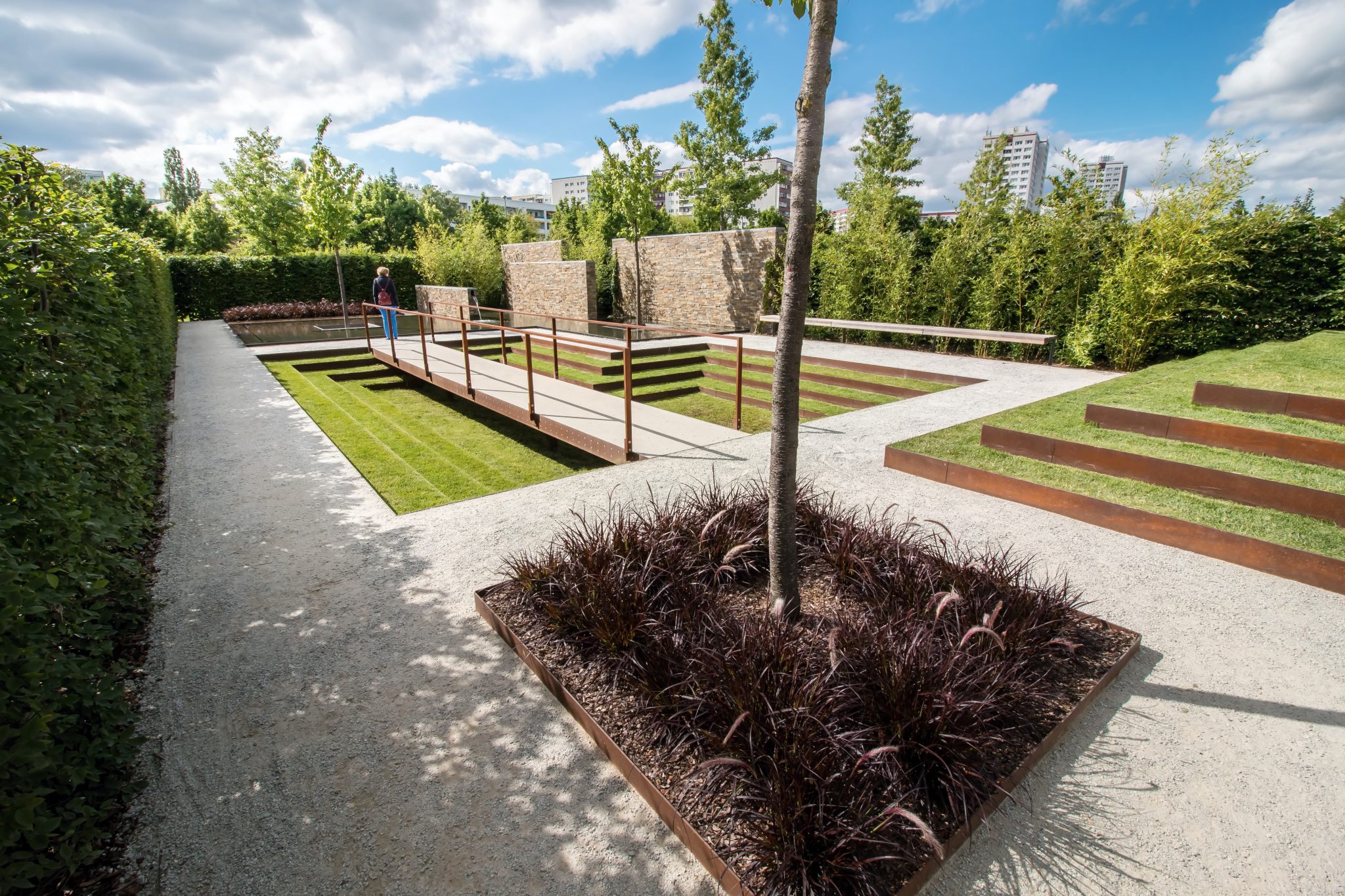
Terracing turns one awkward slope into a series of flat spaces. Each retaining wall holds back the ground above it, and the soil behind is levelled into somewhere you can use.
1. Straight Terraces with Steel Retaining Walls

For clean lines and a contemporary look.
Long, straight terraces stepping down a slope feel calm and architectural. Keep the planting on each level simple, perhaps a single band of grasses along the front, and let the walls give the garden its shape.
Steel works well here because it’s so slim. Our steel retaining walls are 3mm panels that bolt together, from 200mm to 700mm high as standard and taller on request, so they take very little out of each terrace. If you’re weighing up steel against timber, see sleeper vs steel retaining walls.
We’d usually go for two deep terraces over several shallow ones. Deep levels are easier to furnish, and the garden feels bigger for it.
2. Curved Terraces

For a softer, more natural shape.
A curve follows the lie of the land instead of cutting across it. Sweep a terrace around a tree or the edge of a lawn and let planting spill over the top to blur the line. Curved wall sections join to straight runs and corners, so one terrace can sweep round and then carry on straight.
Curves suit larger gardens best. On a small plot they eat into space you’d rather keep.
3. A Level Seating Terrace

For the spot you’ll use most.
If you only level one part of the garden, make it somewhere to sit. Find where the evening sun lands and build there, with a retaining wall along the front and gravel or paving underfoot. Raised a little above the rest, it feels tucked away and looks out over everything below.
This is the terrace we’d build first. Use it for a season and you’ll know far better what the rest of the slope needs.
4. A Sunken Seating Area

For a sheltered corner out of the wind.
Instead of building up, dig in. Cut a seating area into the bank, and the slope above keeps the wind off. Set a bench in front of the retaining wall, and the steel becomes a sheltered backrest.
Water will head for the lowest point, so plan drainage for a sunken area from the start.
5. A Lawn Terrace for Children

For families who need somewhere flat to play.
Children want flat grass for a ball game, and a slope rarely gives them that. Level one terrace for lawn, ideally one you can see from the kitchen window, and plant the banks around it. Keep the wall on the lower edge low, or plant a hedge along it, so there’s no drop to fall from.
6. A Fire Pit Terrace

For evenings that run on into autumn.
A small gravel terrace with a fire bowl in the middle gives you a reason to walk to the far end of the garden. Gravel is safer than decking around a fire, and it drains quickly after rain. Edge the terrace with a low steel wall and put benches along it, so there’s room for everyone round the fire.
Stand a log store at one side so dry wood is always to hand. Our Corten log stores weather to match the walls.
7. A Platform for a Greenhouse or Shed
For the practical side of the garden.
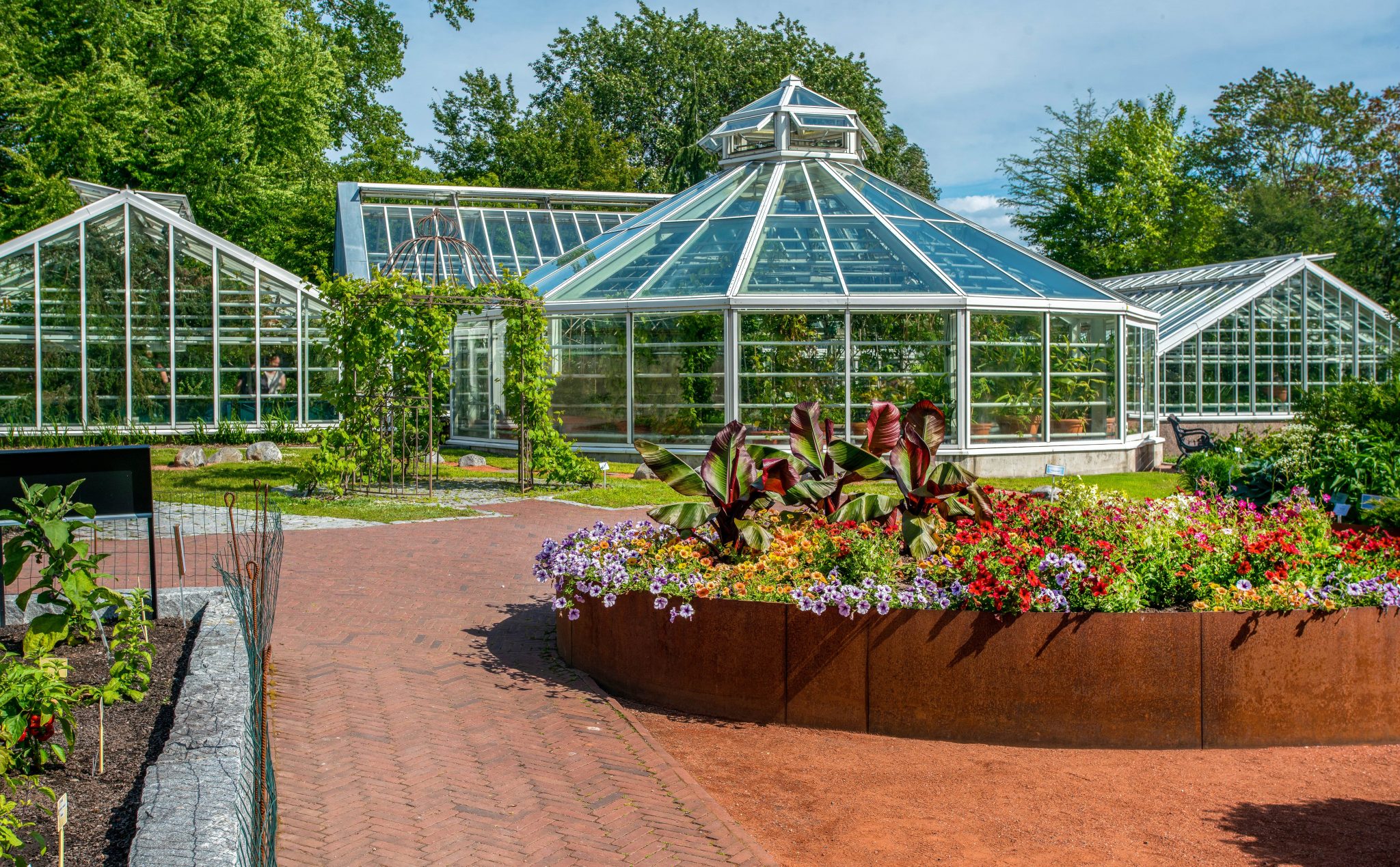
Greenhouses and sheds need level ground, and on a slope that means building a platform. A steel retaining wall can hold a level pad for the base to sit on, which is far easier than packing up one side of a shed with slabs. Put the greenhouse on the sunniest terrace. The shed is best near the path, so you’re not carrying tools up and down the garden.
Garden Steps on a Slope
Steps decide how the garden feels to move through. A generous flight invites you down, while a steep, narrow one means the bottom of the garden rarely gets visited.
8. Corten Steel Garden Steps

For a crisp, modern route between levels.
Corten steps have sharp edges and a warm finish that sits well against gravel and grasses. Our Corten steel stairs weather to the same colour as the retaining walls, so walls and steps read as one design.
9. Gravel-Filled Garden Steps

For a relaxed, cottage-garden feel.
For informal gardens, this is our favourite. A steel frame holds a bed of gravel, giving each step a clean edge and a soft, crunchy surface that drains well. Let thyme or alchemilla creep in at the sides. Within a season, the steps look as if they’ve always been there.
10. Zigzag Steps with Planting at the Turns

For a steep slope that needs a gentler route.
A straight flight down a steep bank can feel like a ladder. Turn the steps back on themselves, and each flight becomes shorter, with a planted bed filling the corner at every turn. It takes more room, but the walk down becomes part of the garden.
11. A Landing with a Bench Halfway Down

For long slopes.
On a long run of steps, break the flight with a wide landing and put a bench on it, facing the view. You get somewhere to stop on the way back up. It often turns out to be the best seat in the garden.
12. Steps Lit for the Evening

For using the garden after dark.
Low lights set into the walls beside the steps, or tucked under each tread, make the slope safe at night and highlight the steel edges. Warm white suits the colour of Corten far better than cool white.
Water Features on a Slope
If you want moving water, a slope is a real advantage. Gravity does most of the work for you.
13. Water Spilling Between Levels

For sound and movement.
Set a water feature at the top of a terrace so the water spills over the edge into a pond or trough on the level below. The sound carries across the garden and does a surprisingly good job of covering road noise. Our Corten water features are made from the same 3mm Corten as the walls and planters, and pumps are available on request.
14. A Rill Beside the Steps

For a formal, contemporary garden.
A narrow steel rill running down beside a flight of steps draws the eye along the slope. Water drops from one level to the next as you walk down. It works best in a straight, formal layout where the rill lines up with the steps, and we make Corten rills to bespoke sizes.
Gardening on a Slope: Planting Ideas
15. Raised Beds on a Slope

For kitchen gardens and cutting beds.
Cut a level platform into the slope for each bed, and it will sit flat even though the ground around it doesn’t. A row of steel beds stepping down a sunny bank makes the slope productive without levelling the whole garden. Grow salads in the beds nearest the house and dahlias for cutting further down.
16. Plants for Slopes and Steep Banks
For banks you’d rather look at than walk on.
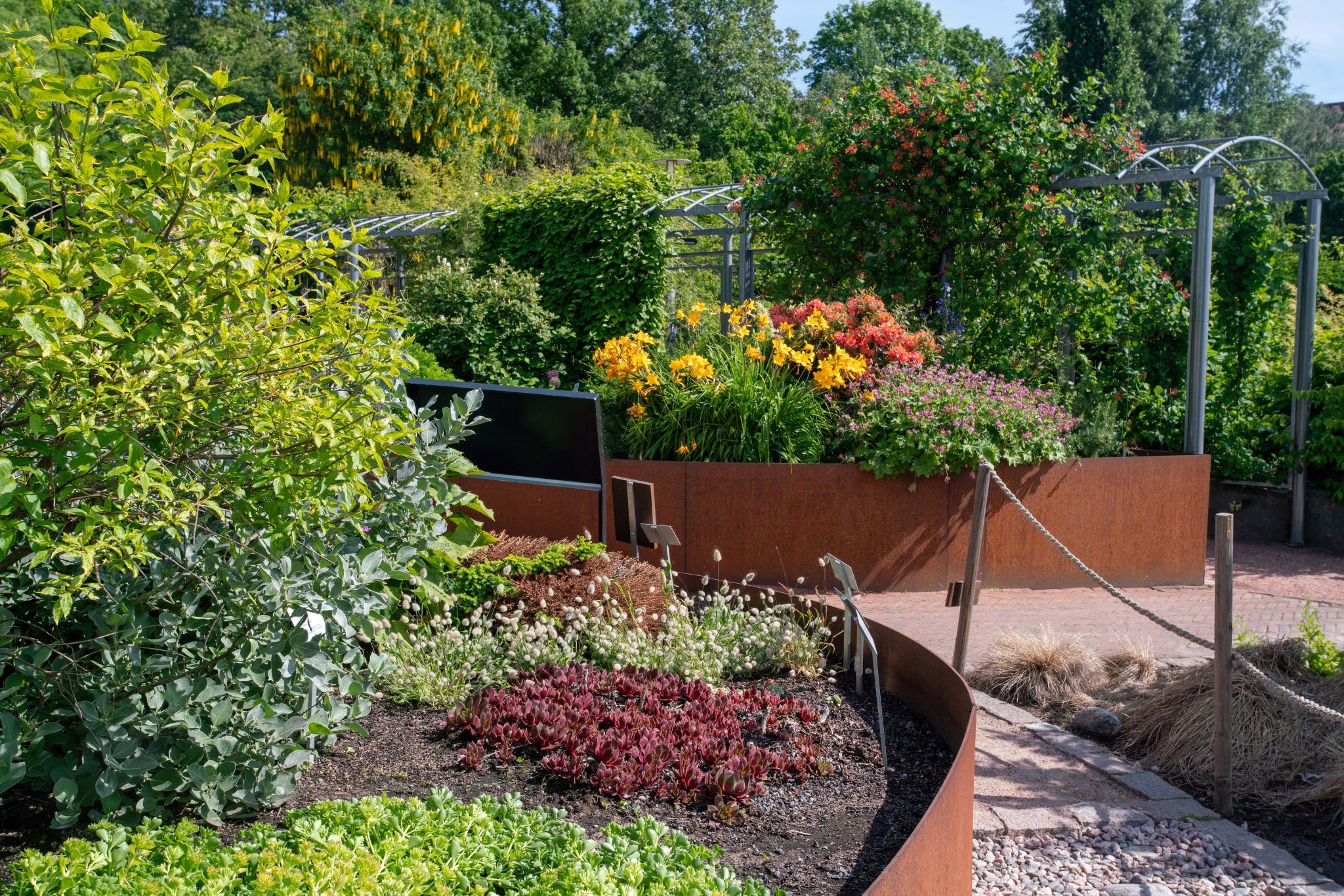
We’d avoid lawn on a steep bank. Mowing it is hard work, and it rarely looks good for long. Plant the bank thickly instead with hardy geraniums, ajuga, carex and creeping thyme, and their roots will hold the soil as they knit together. Plant through a biodegradable mulch mat while everything establishes.
17. A Wildflower Bank
For a low-maintenance slope full of life.
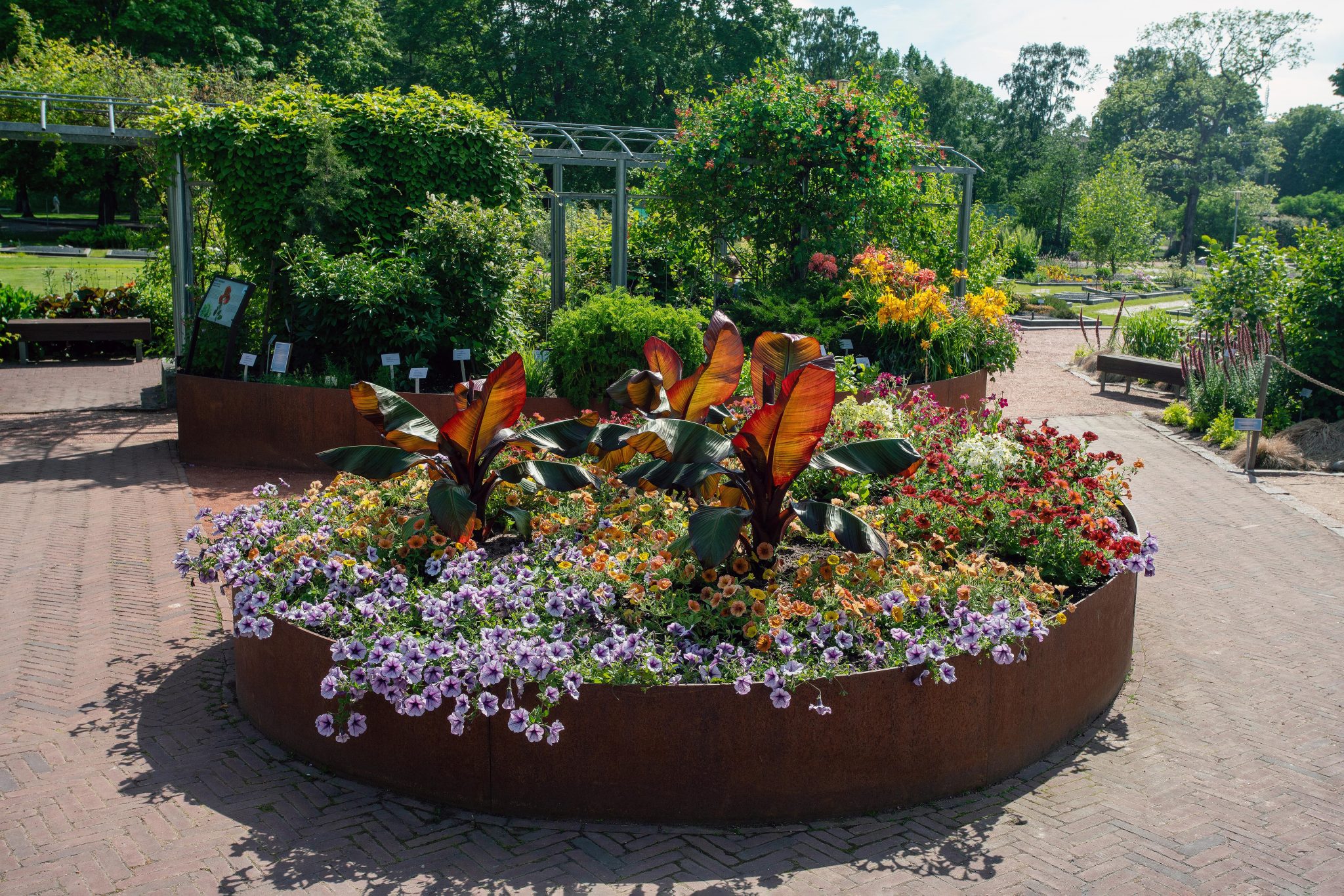
Wildflowers are happy on poor, free-draining soil, which is exactly what many banks have. Sow a native mix or lay wildflower turf, then cut it once a year in late summer. A crisp steel edge along the bottom of the bank stops it looking neglected.
18. A Mediterranean Gravel Slope
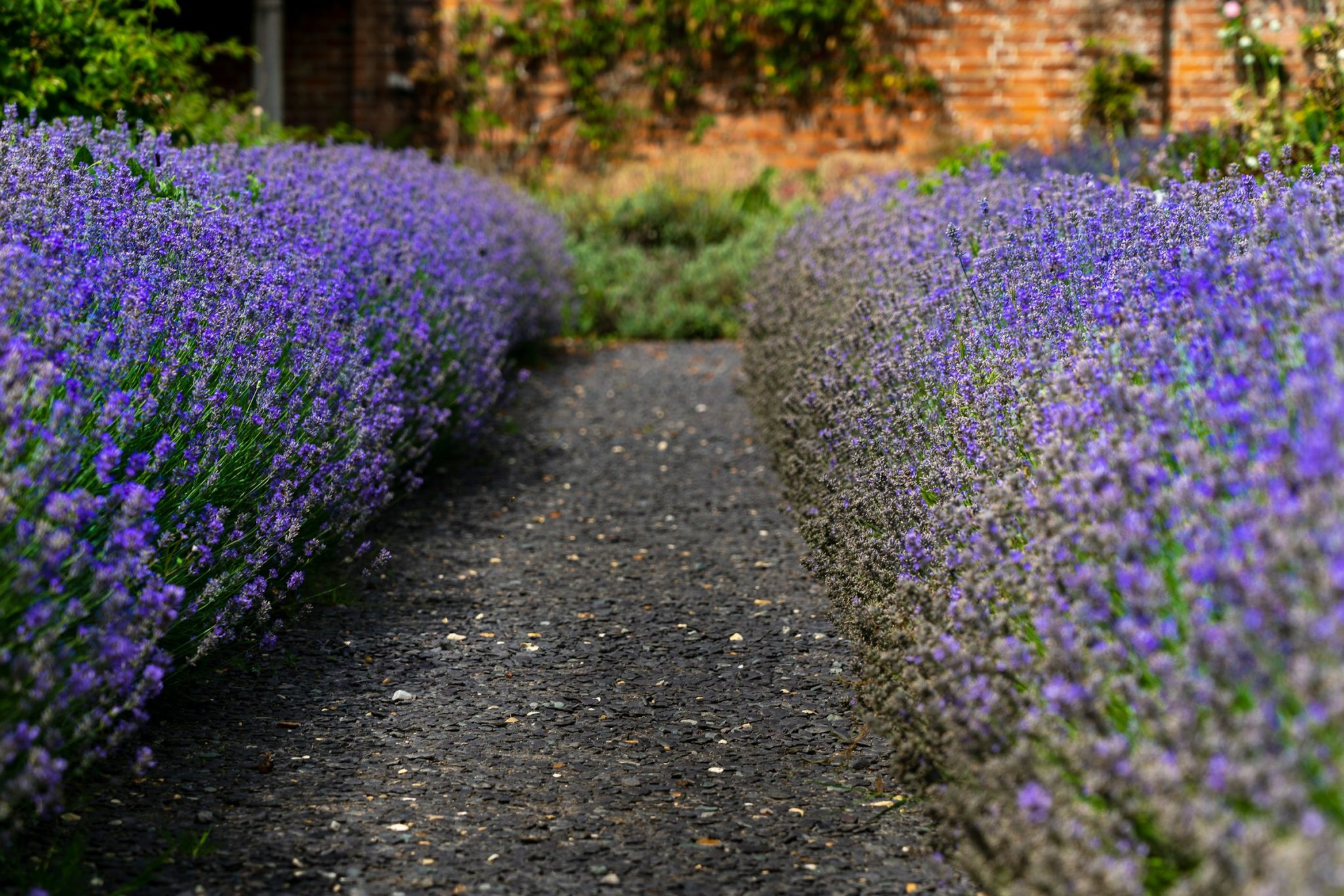
For a dry, sunny bank.
A south-facing slope that bakes in summer is the place for lavender, rosemary, sage and euphorbia. Plant them into a gravel mulch with a few large stones bedded in, and rain drains straight through. Once established, this kind of planting rarely needs watering.
19. Stepped Edging on Gentle Slopes

For borders on a slight slope.
Where the slope is gentle, a run of low edged beds gives the border shape without heavy building work. Keep each step to 100mm to 200mm of soil. Once you go beyond about 250mm, you’ll want a retaining wall instead. There’s more in our garden edging ideas.
20. Planters on the Terraces

For height, colour and a focal point.
A pair of tall planters at the top of a flight of steps frames the way down. On a terrace, planters of different heights grouped together give the eye somewhere to land. Clipped boxwood or an olive tree gives year-round structure, or you can change the planting with the seasons. Our guide to filling a large planter covers drainage and compost.
Sloping Garden Ideas by Type of Slope
Downward Sloping Garden Ideas
When the garden falls away from the house, you usually get a view out over it. Build a level terrace right outside the back door so you can sit and enjoy it. A retaining wall along its front edge holds the ground, with steps leading down to the rest of the garden.
Keep taller planting to the sides, where it frames the view. Anything along the front of the terrace should stay low.
Upward Sloping Garden Ideas
A garden that rises away from the house is on show every time you look out of the window. Tiered beds make the most of it, with planting layered like seats in a theatre, tall at the back and low at the front.
Put a seat at the top. It gives you a reason to walk to the end of the garden and a view back over the planting to the house.
Small Sloping Garden Ideas
Keep it simple in a small garden. Two levels and one flight of steps will feel more generous than four narrow terraces.
Slim steel walls leave you more usable ground than sleepers or blocks would. Using the same finish for everything ties a small space together, and plants trailing over the tops of the walls will soften the lines.
Steep Sloping Garden Ideas
On a very steep slope, don’t try to level everything. Terrace the parts you’ll actually use, usually a seating area and the route down, and cover the rest with planting that holds the soil. Zigzag steps make the climb easier, especially with a landing partway down.
Walls on a steep slope hold back a lot of ground, so get advice on them before you start.
Sloped Front Garden Ideas
A front garden is the first thing people see. Steps up to the door with a low retaining wall either side look smart and finished, and the walls create planting beds along the path.
Evergreen planting keeps it looking good all year. Finish with a matching pair of planters by the door. If the slope runs down to the pavement, a low wall along the boundary keeps soil off the path, but check where the boundary sits with your neighbours first.
How to Level a Sloping Garden: What to Check First
How to Measure a Slope in Your Garden
Before you plan anything, work out which way the garden slopes and how far it drops. Those two numbers decide how many levels you can fit and how tall the walls need to be.
All you need is a couple of stakes, a length of string and a spirit level.
- Push one stake in at the top of the slope and one at the bottom.
- Tie the string to the top stake at ground level.
- Pull it tight to the bottom stake, level it with the spirit level and tie it off.
- Measure from the string down to the ground at the bottom stake. That’s the total drop.
- Measure the distance between the two stakes.
Drainage and Wall Height
Water builds up behind a retaining wall, and wet soil is heavy. Put a layer of gravel behind the wall with a permeable membrane between the gravel and the soil, so water drains away without carrying soil with it. On clay or very wet ground, add a perforated pipe at the base as well.
Low walls holding back a small change in level are a reasonable DIY job. For anything retaining more than about a metre, or close to a house or boundary, get a structural engineer’s advice first.
Neighbours and Soil
If a wall sits on or near a boundary, speak to your neighbours before you start. It also helps to plan where the dug-out soil will go. Used to fill behind the walls, it means less to take away.