
Garden Edging Ideas for Flower Beds: 14 Ways to Frame Your Planting
Beds are the most rewarding part of a garden to plant up, and the most exposed when the edge is wrong.
A good edge keeps mulch in place, holds back soil, stops grass and weeds creeping in, and gives the planting something to sit against.
The wrong choice, or no edging at all, can leave even the most carefully planted bed looking unfinished.
There are more materials than most people realise. Here are fourteen worth considering, including the ones we’d point you elsewhere for.
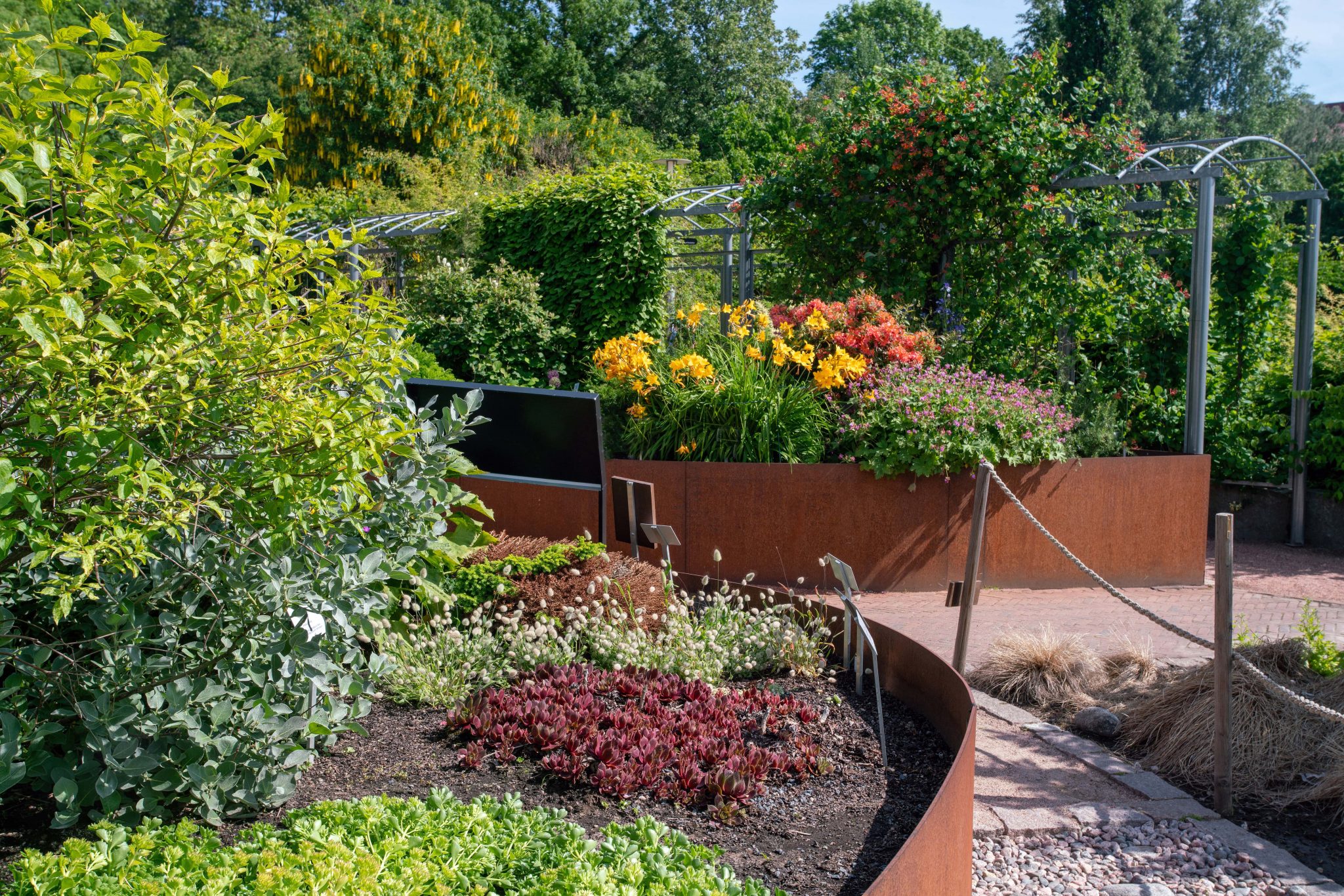
Metal edging
Metal has been the designer choice for a decade now. It holds its line under the weight of soil and mulch, and it stays out of the way of the planting.
1. Corten steel
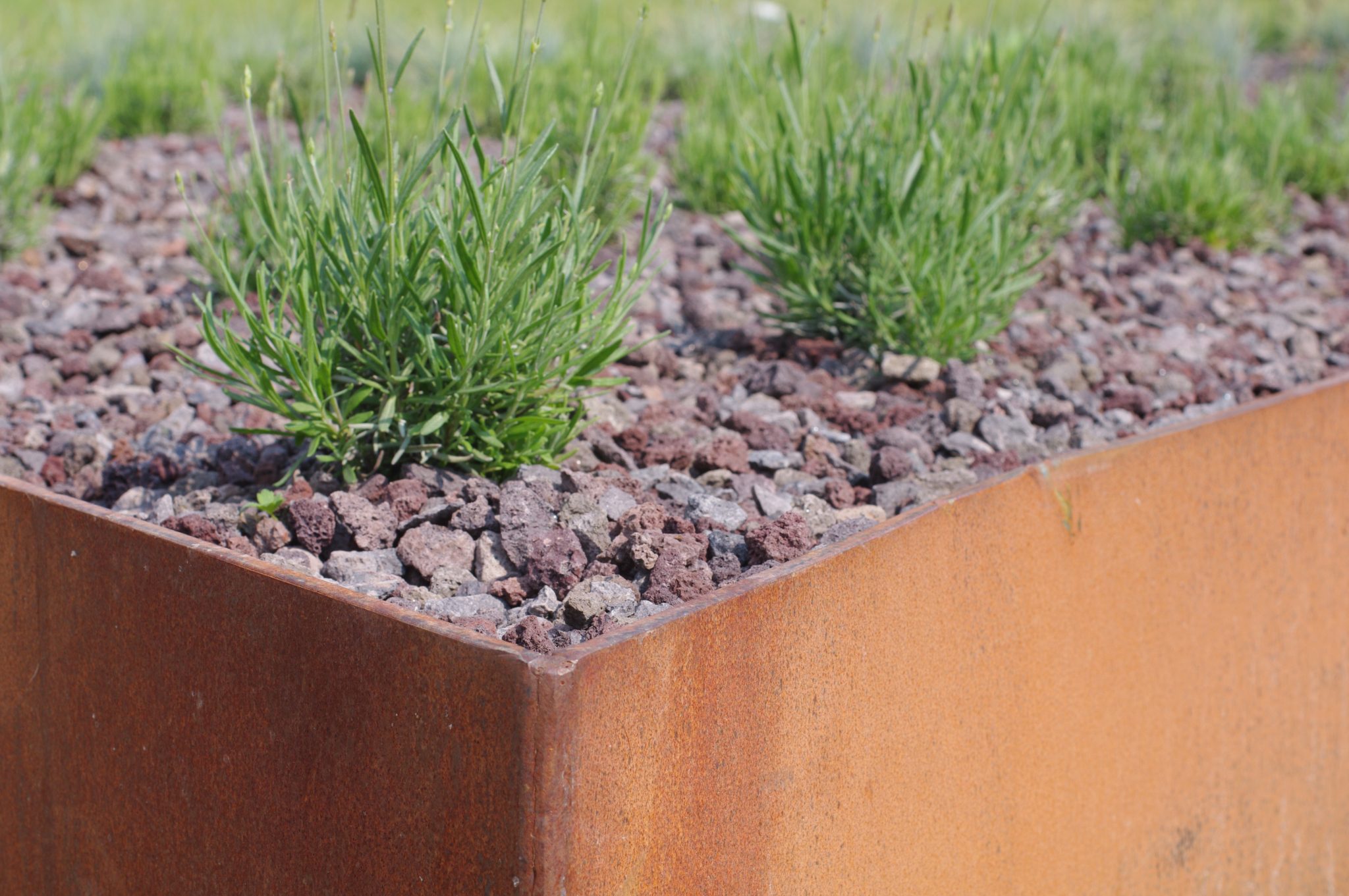
The one most people mean when they say metal edging.
Corten is the default for designer-led borders now. The patina takes six to twelve months to come through, and once it has, the edge stops looking like metal and starts looking like part of the garden.
It sits well with ornamental grasses, lavender and silver-leaved Mediterranean planting, and the warm tone flatters gravel mulch and dense green foliage alike. It works in a minimalist scheme and it works in a cottage border. Our Corten steel edging comes in 3mm and 6mm, at more or less any height you want.
2. Curved Corten
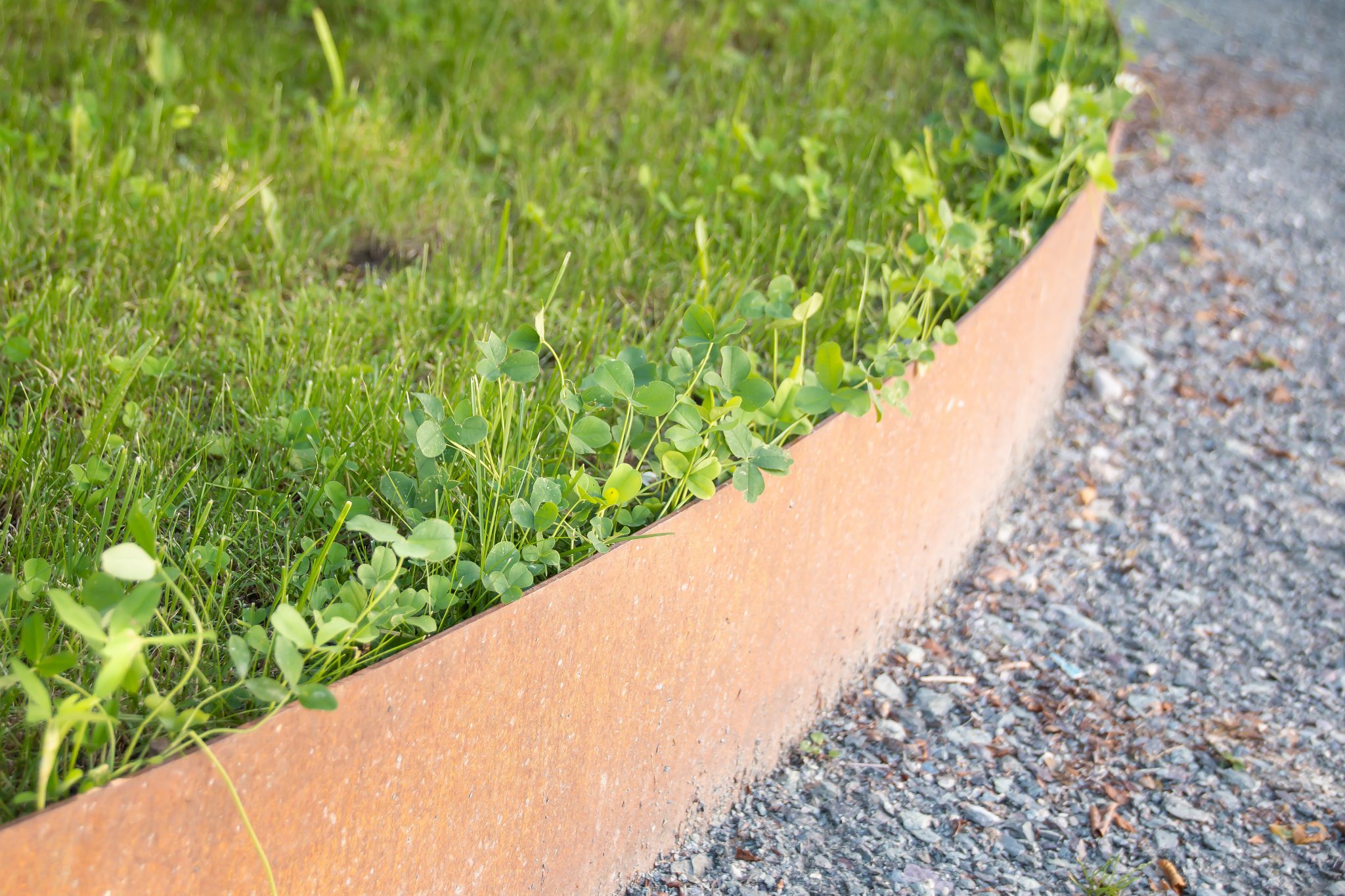
For beds with curves in them.
This is the thing Corten does that brick, concrete and stone can’t. A 3mm sheet eases into a sweeping arc under hand pressure, on site, with no cutting. Kidney-shaped beds, circular planting islands, borders that follow the contour of a slope, all straightforward. It’s why designers working with naturalistic, prairie-style planting keep coming back to it. For tighter radii we pre-form the sections before they leave us.
3. Raised Corten flower beds
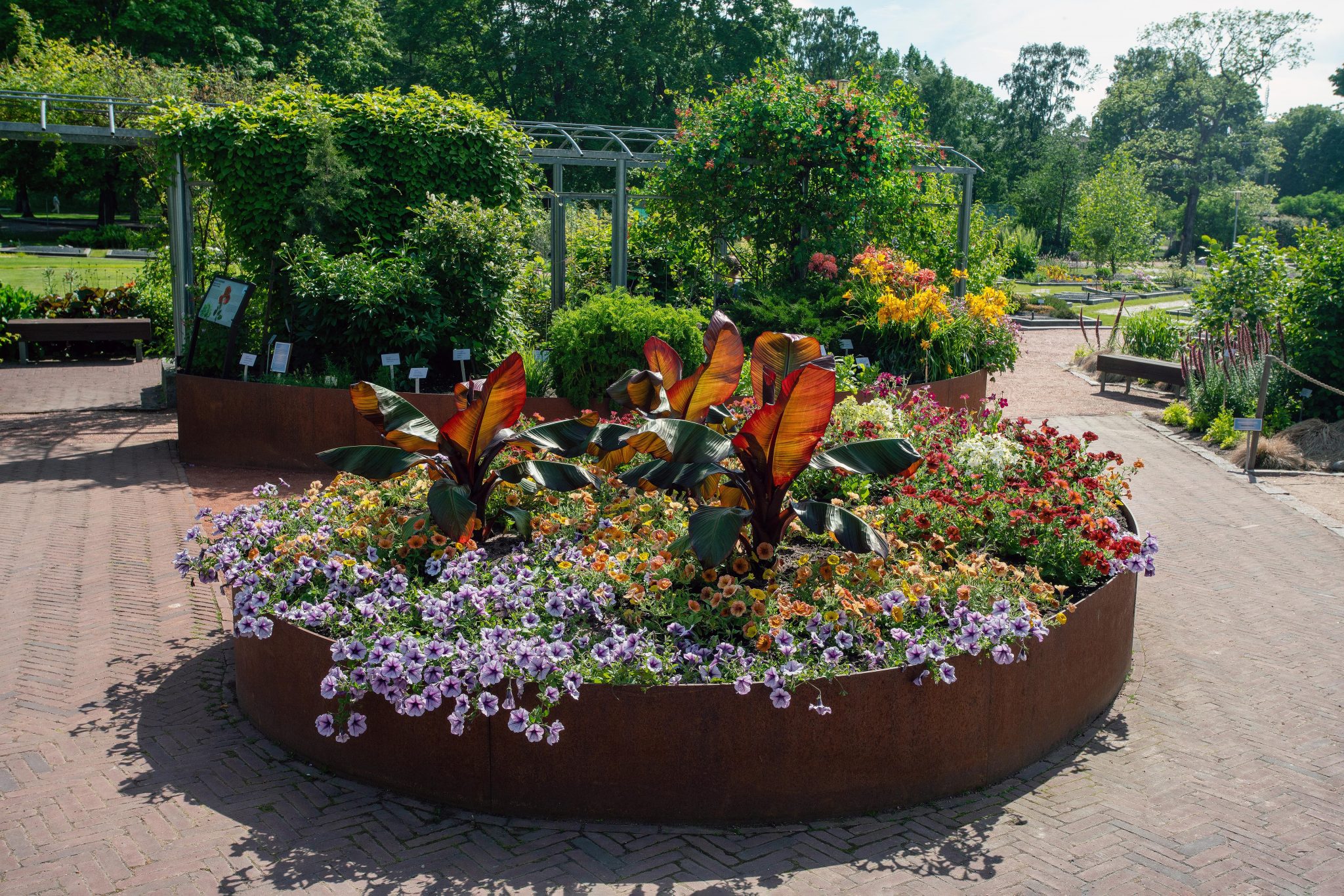
Off the ground, at working height.
Raising a bed changes how it reads. The eye goes to it, the planting comes up to a comfortable working height, and anything that hates sitting wet gets the drainage it wants.
Corten takes height well, so a raised border can be as tall as the design needs without going floppy. Use it as standalone planters, or configure runs into one long raised border. The rust finish softens what would otherwise be a hard edge. Bespoke heights and shapes if the standard sizes don’t fit.
4. Mild steel
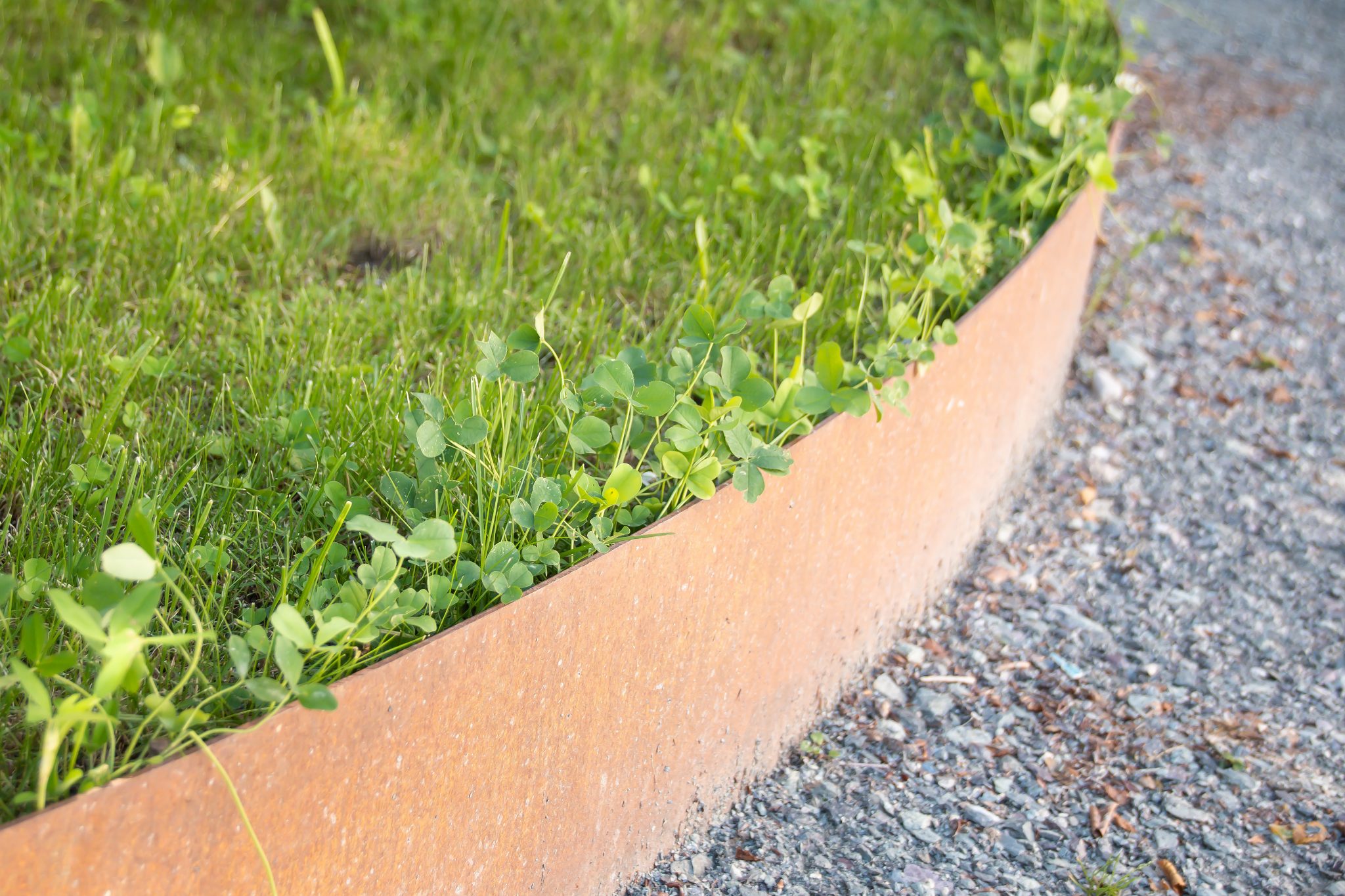
The budget version of the Corten look.
Same clean line, same contemporary look, less money. Mild steel rusts in the weather just as Corten does, so for the first few years you’d struggle to tell them apart.
What you give up is lifespan. Corten’s patina seals itself. Mild steel’s doesn’t, so it keeps going and eventually rusts right through. If that’s a trade you’re happy with, our mild steel edging saves you a meaningful amount.
5. Stepped edging on sloped beds
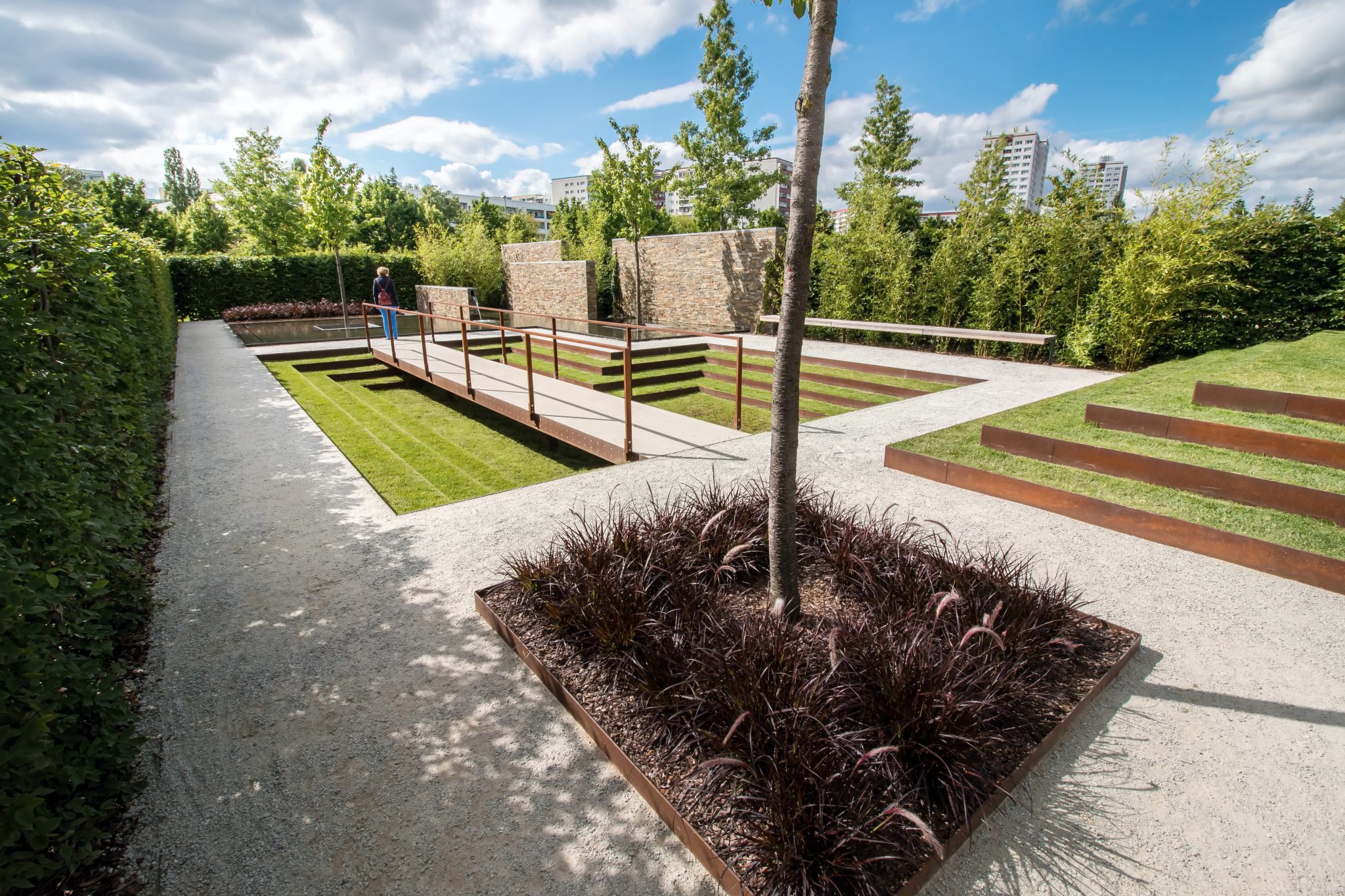
For a slope, in shallow steps.
On a slope, a single sloping border rarely looks right. Break the level into a run of shallow terraces instead, each one a low step, following the contour.
Gentle slopes only. Past a certain point you’re not edging any more, you’re retaining, and that needs a different product. More on that further down.
Natural materials
If your borders lean cottage, country or naturalistic, something softer than steel usually works better.
6. Timber sleepers
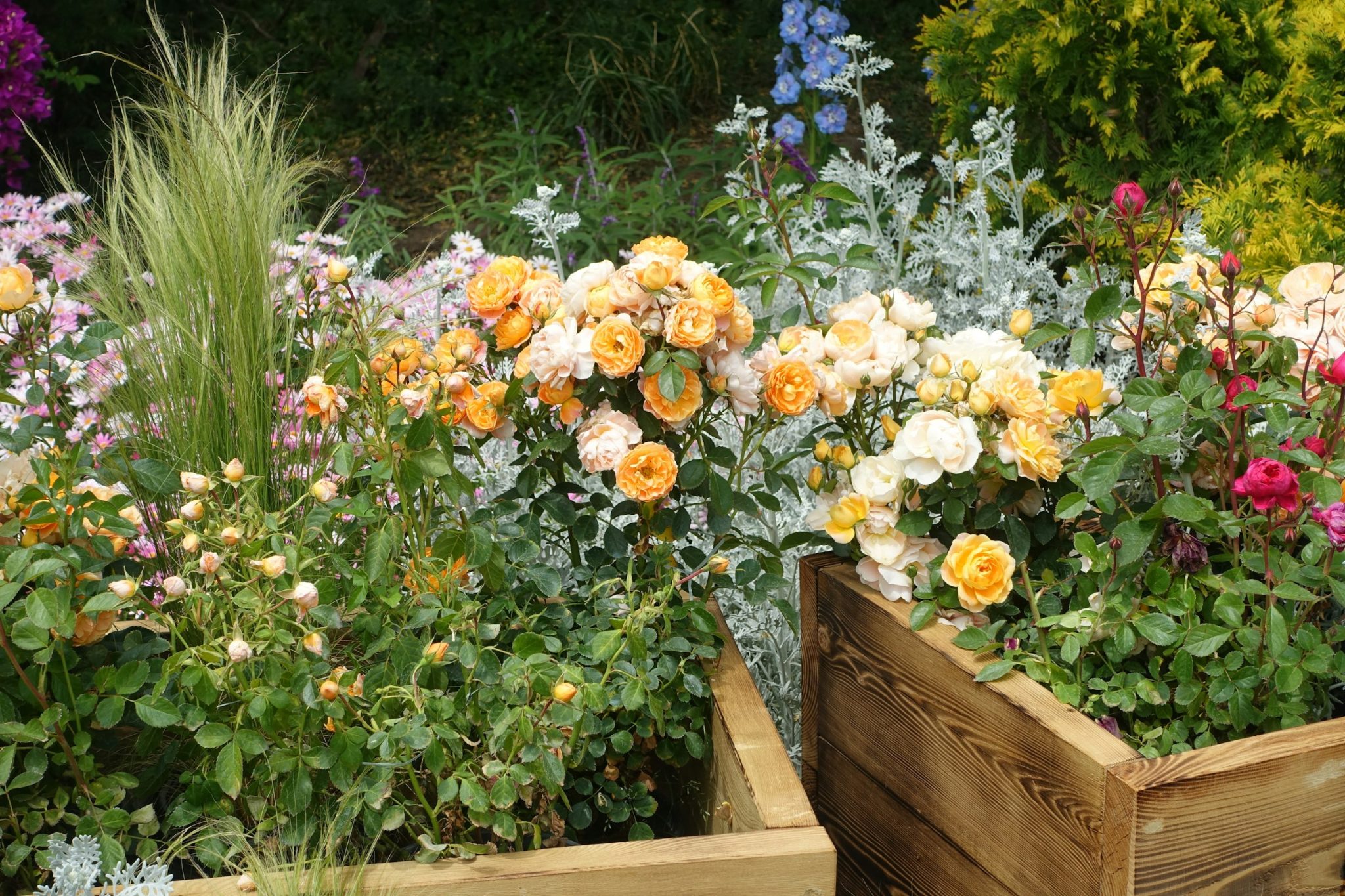
Warm, heavy timber for a cottage or kitchen garden.
Sleepers have a warmth to them that suits cottage and kitchen gardens. Stacked on edge they’ll hold back a serious amount of soil. Laid flat they make a wide, characterful frame round an island bed or along a path.
Then there’s British weather. Even pressure-treated sleepers rot in the end, and the first to go are the ones sitting in damp, mulched soil. Ten to fifteen years for treated softwood. Longer for hardwood, or for a genuine reclaimed railway sleeper.
7. Log roll
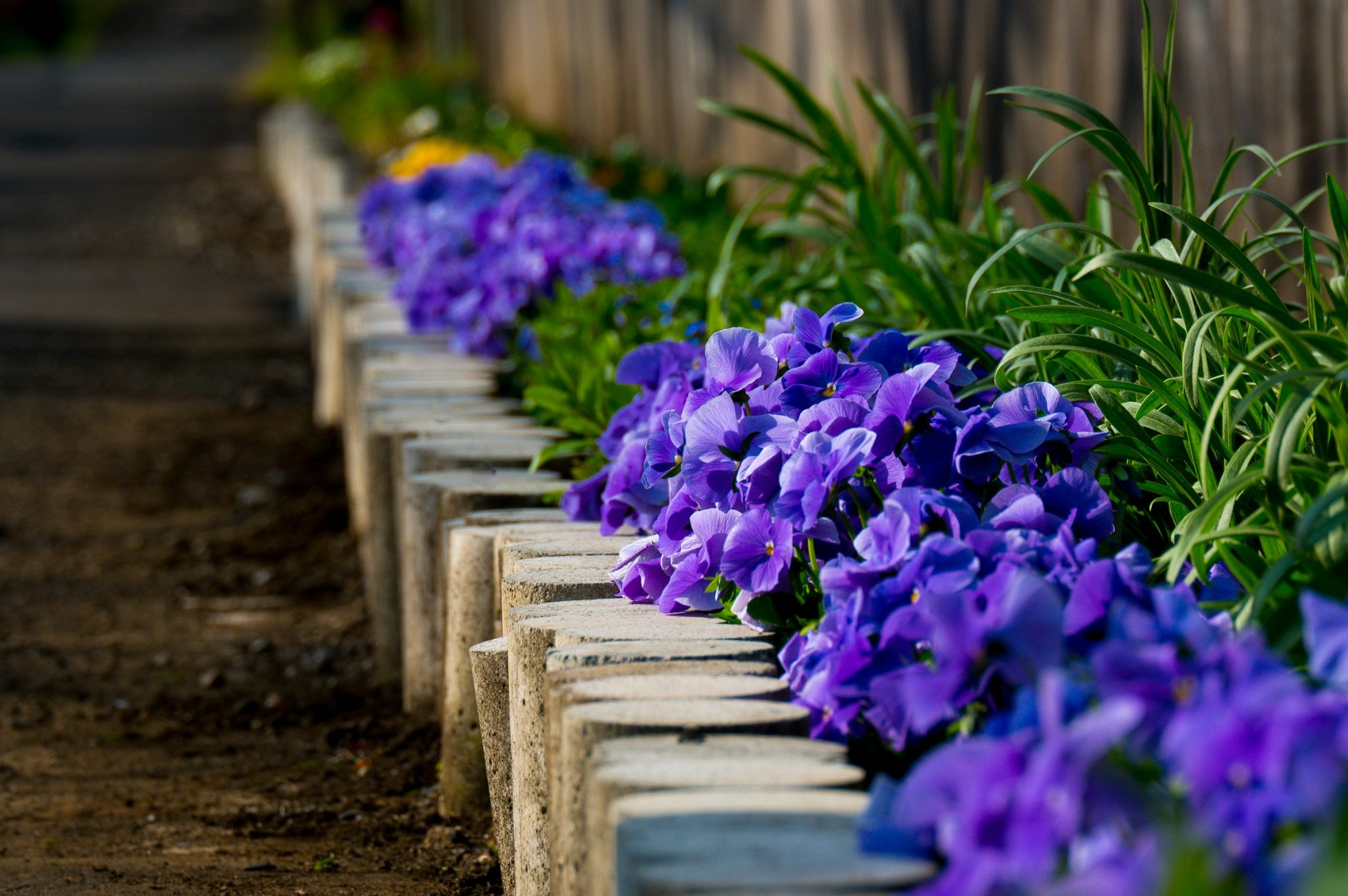
The cheapest, quickest thing you can put round a bed.
Exactly what it sounds like, small log sections wired together into a flexible roll. You can put it in over a lunch break, it costs almost nothing, and it gives an informal cottage border the relaxed look it wants.
Five to seven years and it’s done, even treated, as the wood softens and the wire corrodes. Treat it as a stopgap, or use it where you don’t mind redoing things.
8. Willow or hazel hurdles
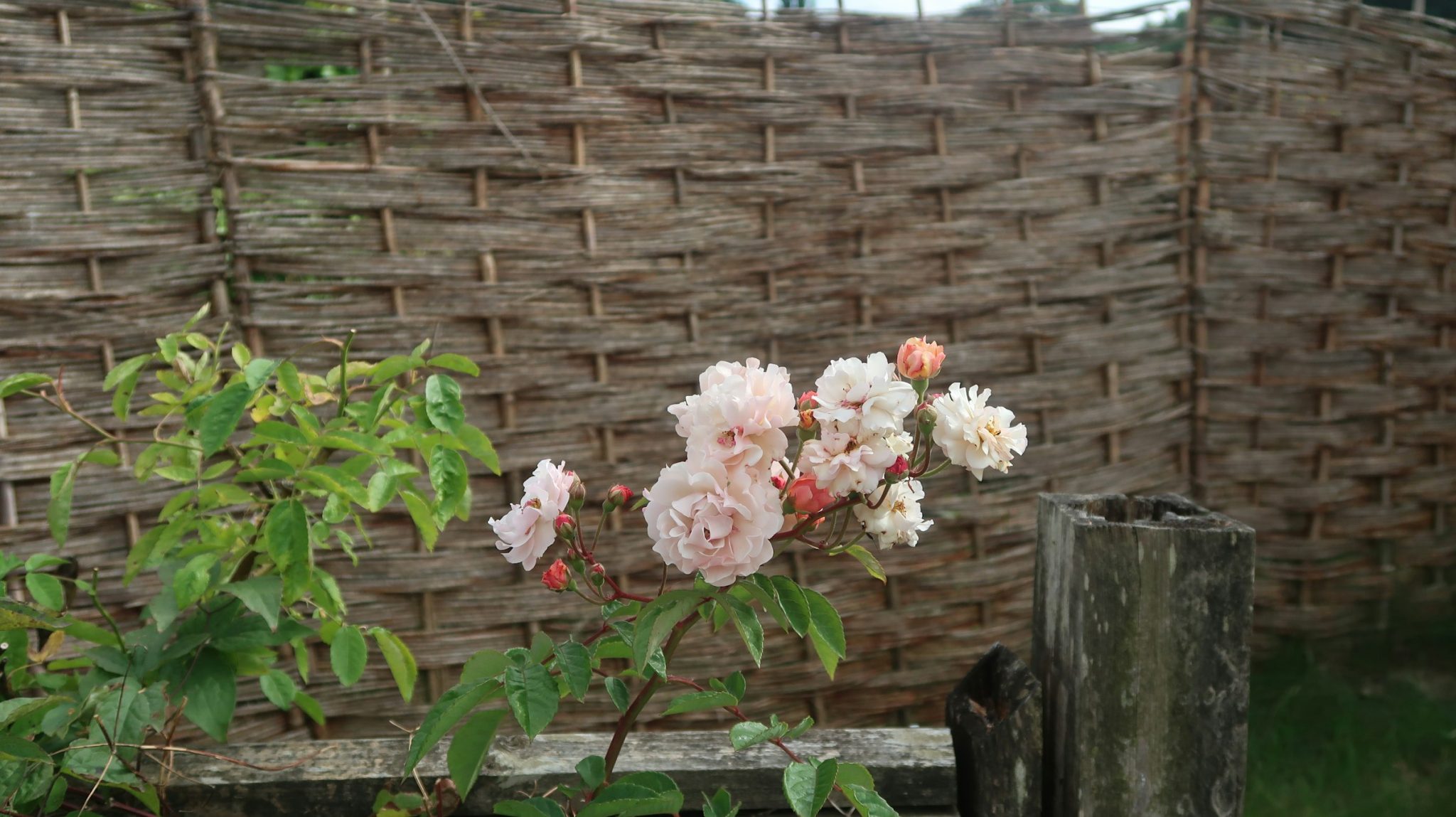
Hand-woven panels for wildlife and cottage borders.
Someone wove each panel by hand, and you can see it. Hurdles suit wildlife borders, cottage schemes and anything rustic, and they weather to a soft grey that looks better than new. Put them behind foxgloves, hollyhocks and aquilegias and the whole thing looks like it grew there.
Three to five years is a fair expectation, less on a damp or shaded site. Buy them for the look and the sustainability story rather than the lifespan. On both of those counts they’re a strong choice.
9. Living edging
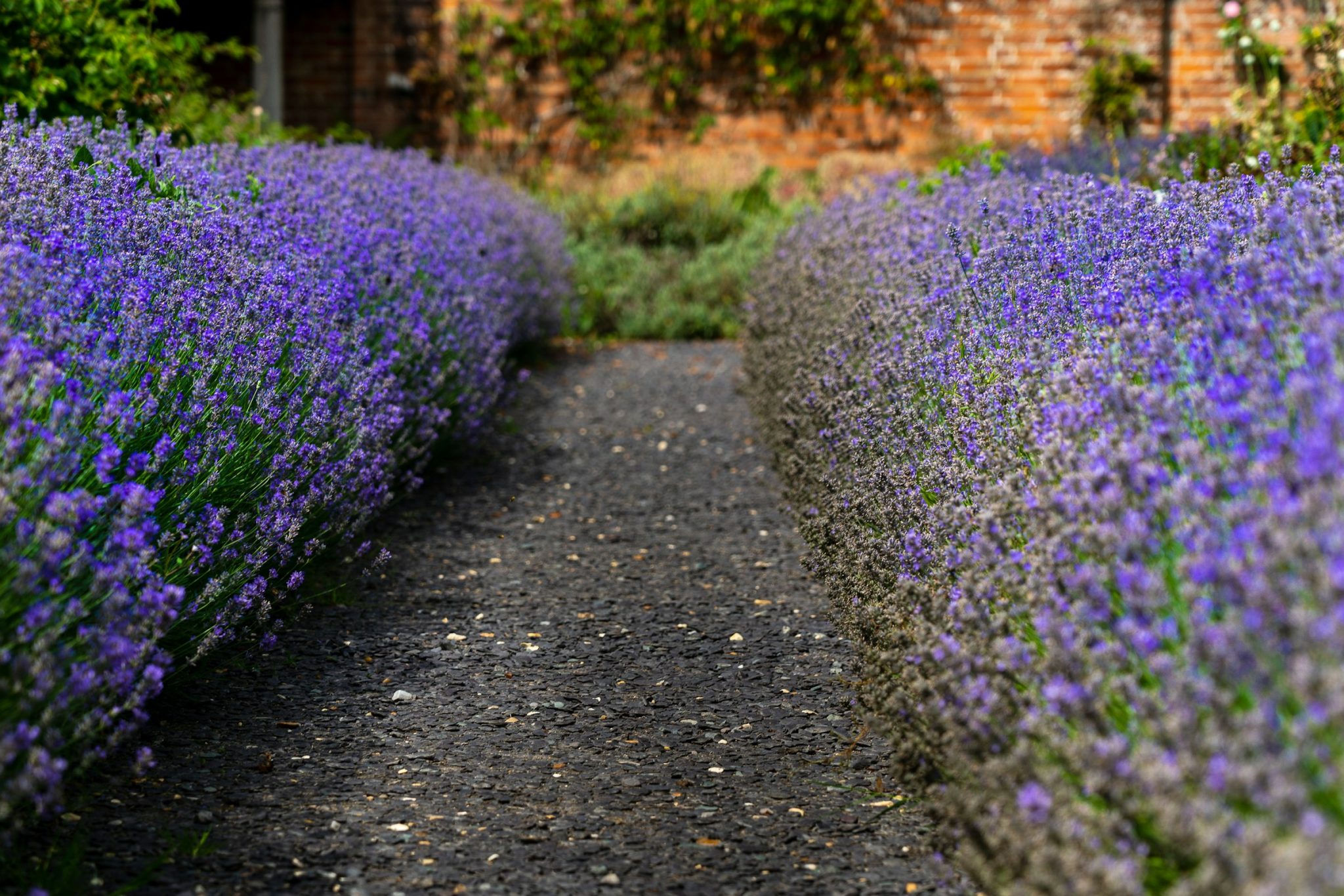
No edging at all. Let the planting hold the line.
Plants make a beautiful edge. Clipped box is the traditional English answer and has been for centuries. Lavender brings scent and pollinators along with the definition. Creeping thyme spills low over a path and smells good when you tread on it.
You’ll be trimming it once a year, and you’ll never get the crisp instant line a manufactured edge gives you.
Box blight has made the last few years hard, so look at Ilex crenata or Euonymus japonicus if you want the formal effect without the risk.
Stone and brick
The most permanent options on the list, and the ones that suit a period property best.
10. Brick on edge
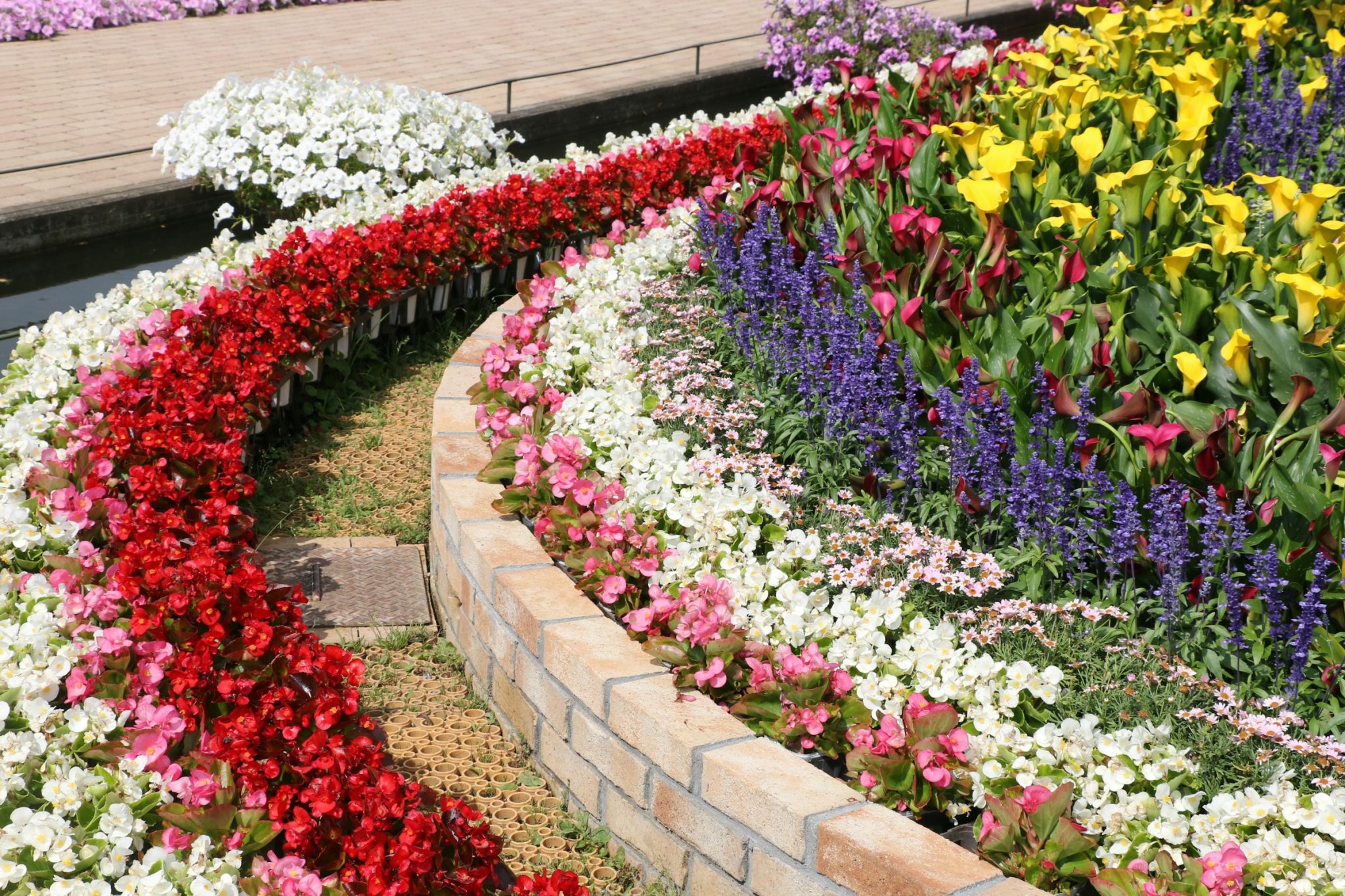
Cheap reclaimed, and it suits an older house.
Brick has been edging British beds for a very long time, and it works best when the brick matches the house. Reclaimed comes with the patina already on it, and salvage yards usually sell it cheaply.
Traditional cottage and Victorian borders are the obvious home for it, though a contemporary scheme can carry it with the right brick. Installation is the catch. Bricks need a proper bed of mortar or concrete to stay put, more so on a curve. Weekend project, not an afternoon one.
11. Setts and cobbles
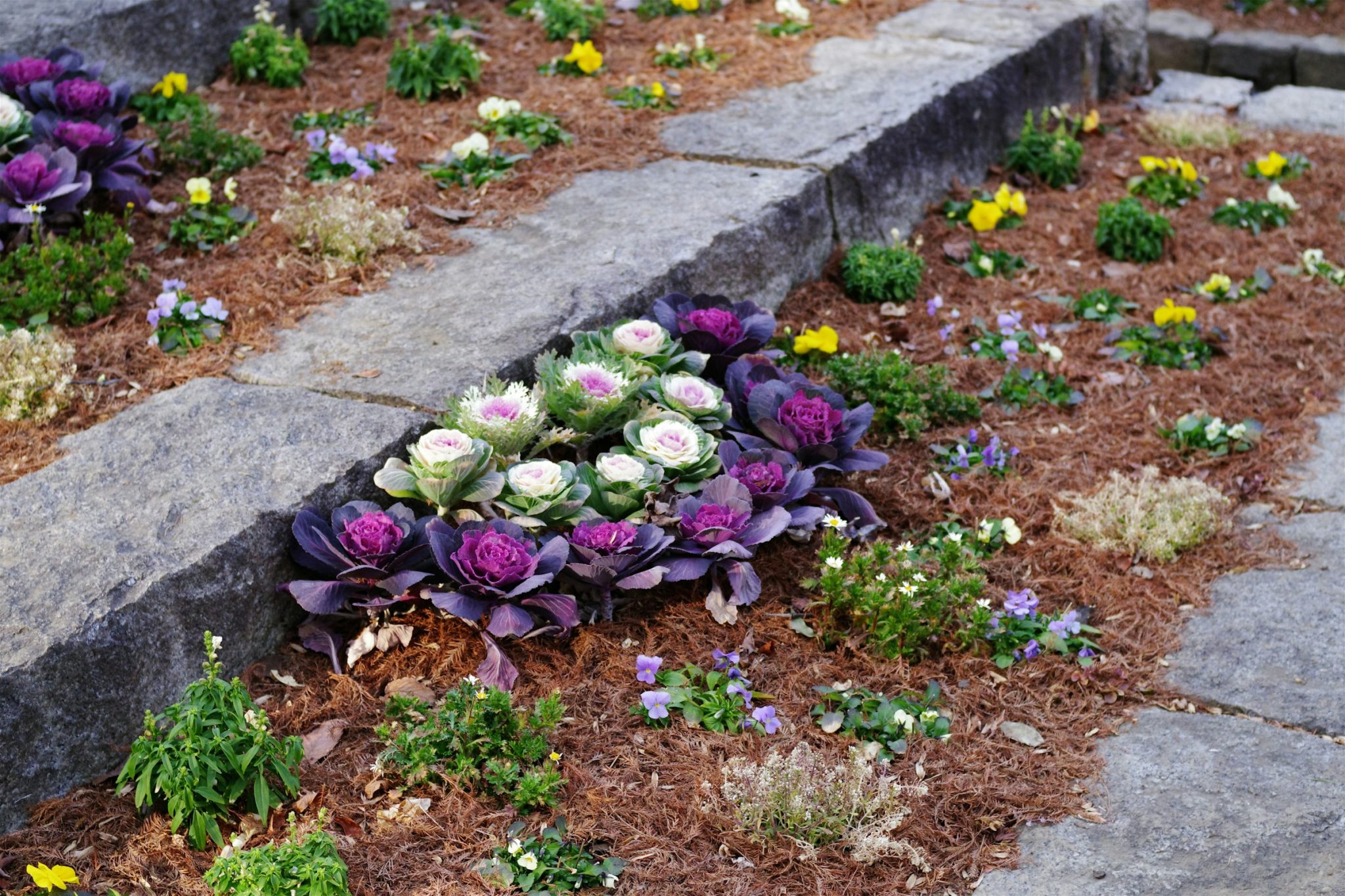
Granite, for a period property that deserves it.
Granite setts give a bed a heritage feel that sits right against a period property, and they’re as hardwearing as edging gets. A single row alongside planting gives you a crisp line with real texture. They cost more than brick and they’re harder to lay well, so this is a job for a good landscaper. Laid properly they’ll outlast the house.
12. Natural stone
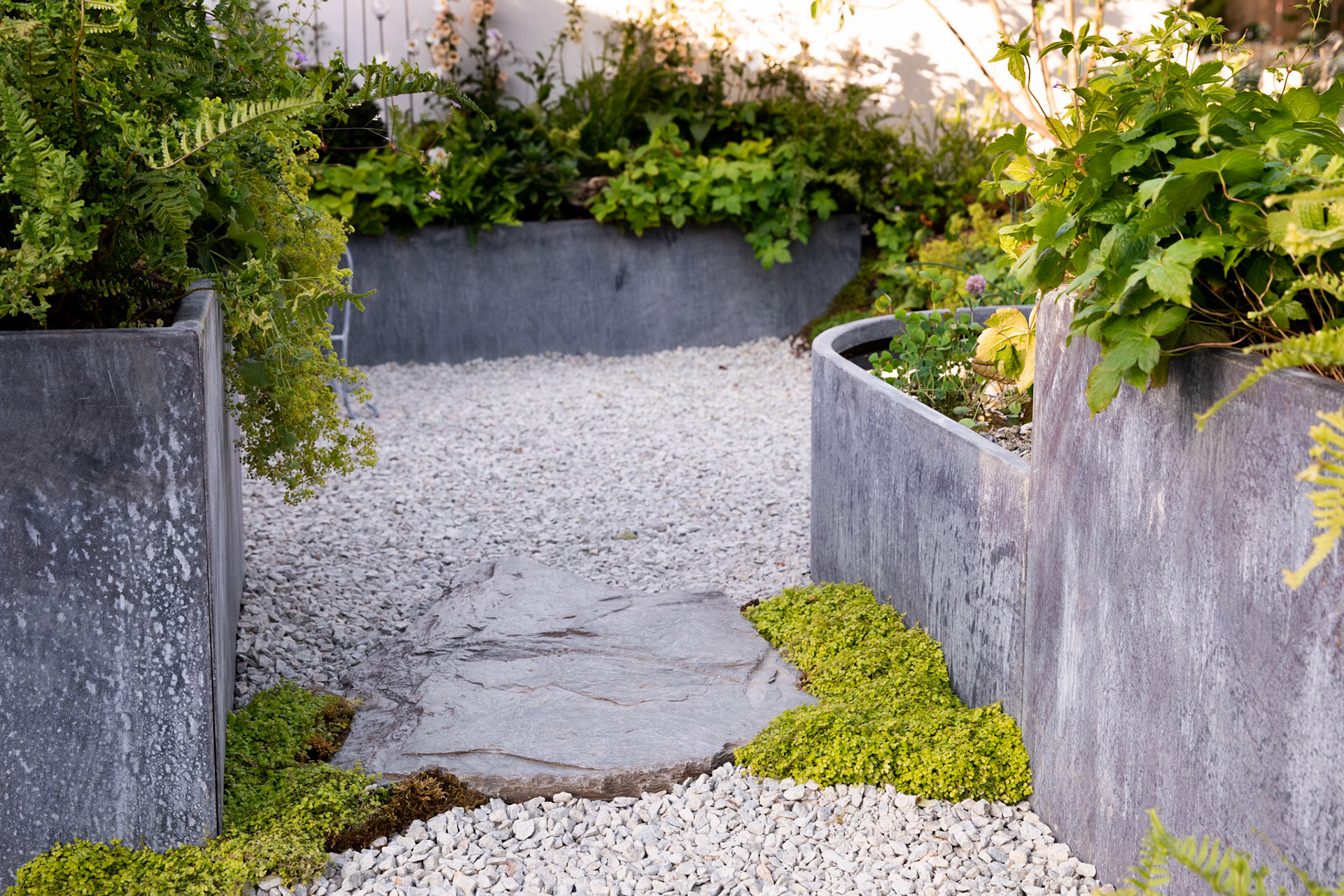
The expensive option, and the one that varies most.
Sandstone, slate and limestone all make a high-end edge. Every piece is different in colour and texture, and the right stone will sit beautifully with whatever else you’ve used for hard landscaping.
Creative ideas
Two that lean further from the conventional, for when you’d rather not do what the rest of the street has done.
13. Mixed materials
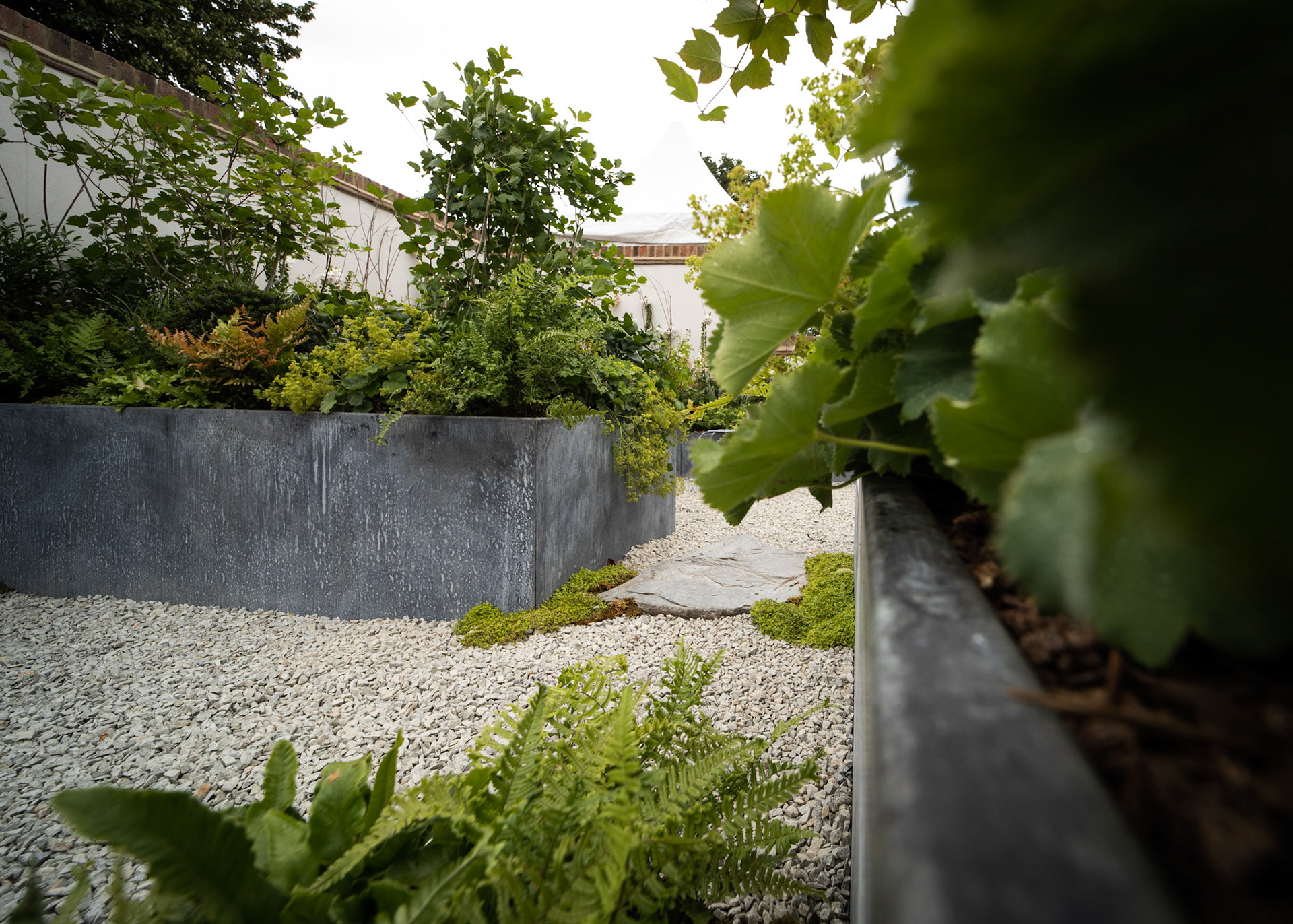
Layering two or three, on purpose.
The beds that look most considered rarely use one material. Corten with a cobble mowing strip. Brick with a low box hedge in front. Natural stone with a thin steel strip behind it to sharpen the line.
Layering adds depth that a single material struggles to get on its own. The trick is picking things that share something, whether that’s colour, era or texture, so it reads as a decision rather than an accident.
14. Salvaged and reclaimed
alt: Old clay roof tiles laid on edge as a border around a cottage flower bed
Character on a budget, where nothing needs holding back.
Old clay roof tiles laid on edge give a soft, weathered line that suits a cottage garden. Salvaged terracotta and stoneware work in Mediterranean planting. Reclaimed brick arrives with its patina already on it.
None of it is structural, so keep it to beds where the edge is doing decorative work rather than holding back a lot of soil. It also keeps usable material out of landfill, which is part of the appeal.
When you need a retaining wall
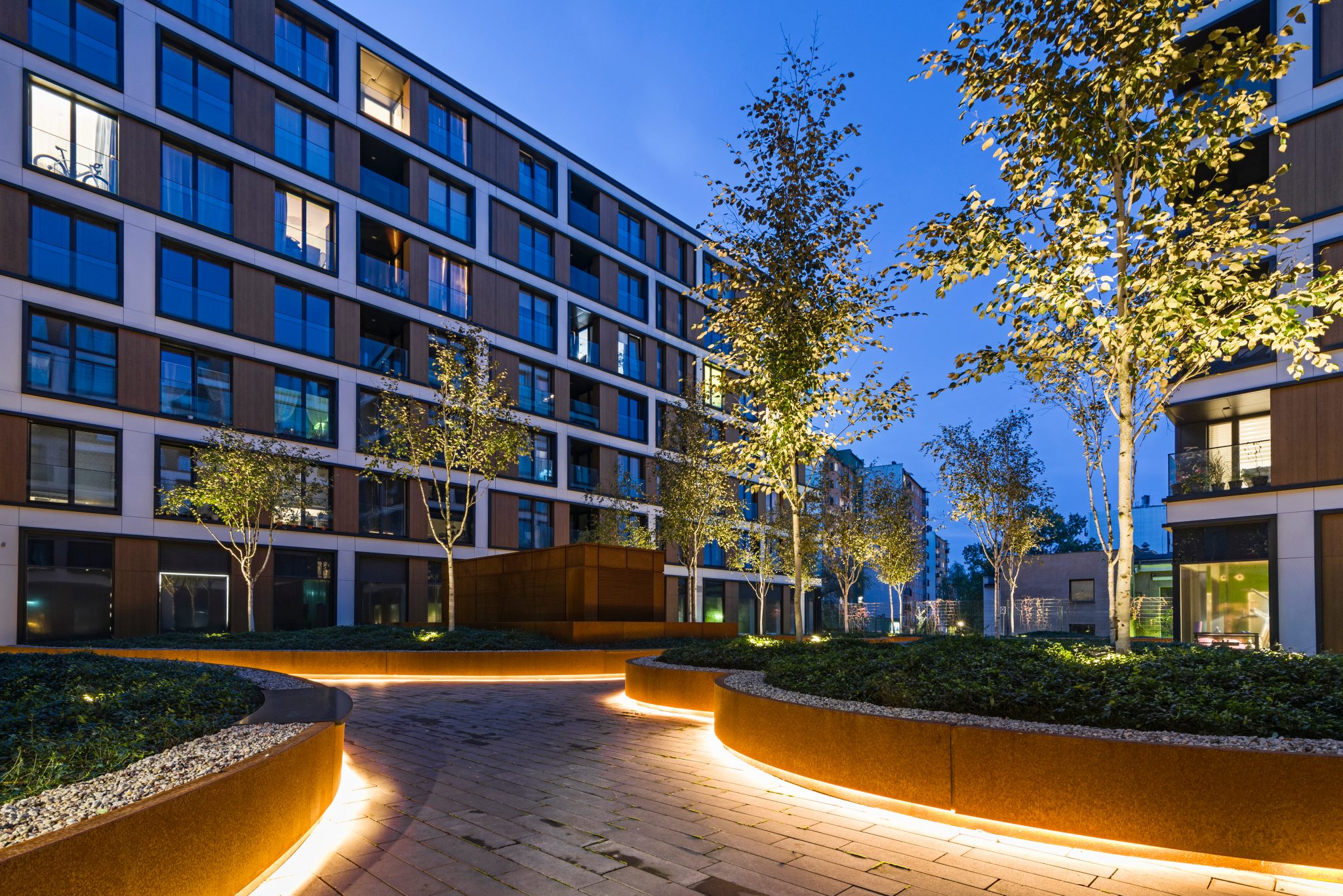
Edging has a limit. On a steep slope, or under a substantial raised border, push it past that limit and it’ll bow under the load or work loose.
Our garden retaining walls are built for that job, with thicker steel and structural support. Same Corten finish as the edging, so the two sit together in one scheme.
| Edging idea | Best for | Lifespan | Install | Rough cost |
|---|---|---|---|---|
| 1. Corten steel | Contemporary, designer-led borders | Decades | DIY-friendly | Mid to high |
| 2. Curved Corten | Kidney-shaped and organic beds | Decades | DIY-friendly | Mid to high |
| 3. Raised Corten beds | Accessible, architectural borders | Decades | Moderate | High |
| 4. Mild steel | The Corten look for less | Shorter, rusts through | DIY-friendly | Low to mid |
| 5. Stepped edging | Gentle slopes, 100–200mm per tier | Decades in Corten | Moderate | Mid to high |
| 6. Timber sleepers | Cottage and kitchen garden beds | 10–15 years | Heavy, two-person | Mid |
| 7. Log roll | Quick, informal borders | 5–7 years | Easiest on the list | Lowest |
| 8. Willow or hazel hurdles | Wildlife and rustic beds | 3–5 years | Easy | Low to mid |
| 9. Living edging | Formal borders as a feature | Indefinite with trimming | Easy to plant | Low to mid |
| 10. Brick on edge | Period and Victorian gardens | Decades | Needs mortar | Mid |
| 11. Setts and cobbles | Heritage properties | Outlasts the house | Landscaper job | High |
| 12. Natural stone | High-end schemes | Decades | Landscaper job | High |
| 13. Mixed materials | Layered garden design | As its weakest material | Varies | Varies |
| 14. Salvaged and reclaimed | Decorative, characterful edges | Varies | Easy, not structural | Lowest to low |
Rough guides for UK conditions. Exposure, drainage and how much soil you’re holding back all make a difference.
Choosing your edging
Edging is a small detail that changes how a finished garden feels out of all proportion to what it costs. Get it right and the border reads as deliberate. Get it wrong, or skip it, and the planting looks unfinished however carefully you chose it.
You don’t have to pick one. A Corten-edged border at the front, brick round a kitchen bed at the side, willow tucked behind a cottage planting at the back. That’s a coherent garden rather than an indecisive one, as long as the choices are made on purpose.